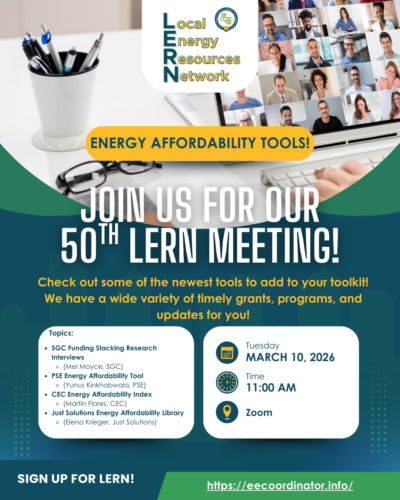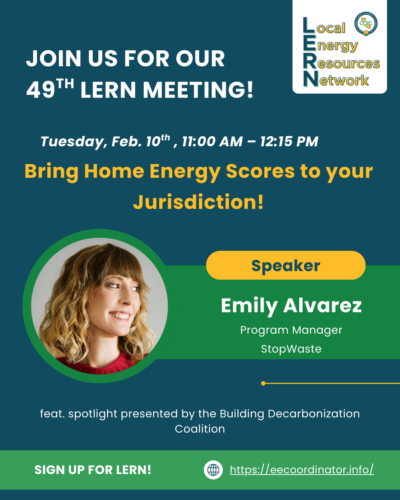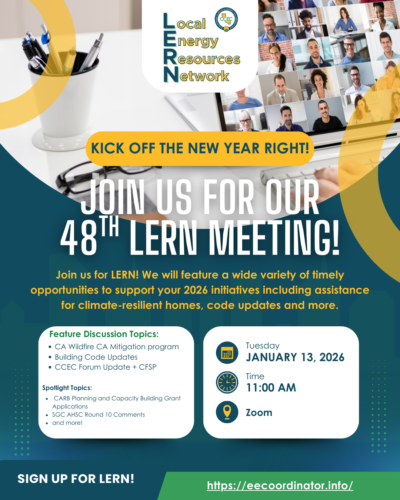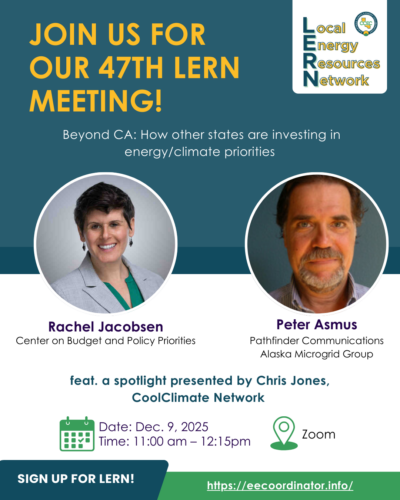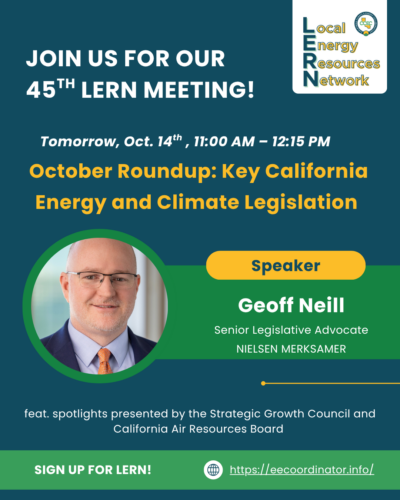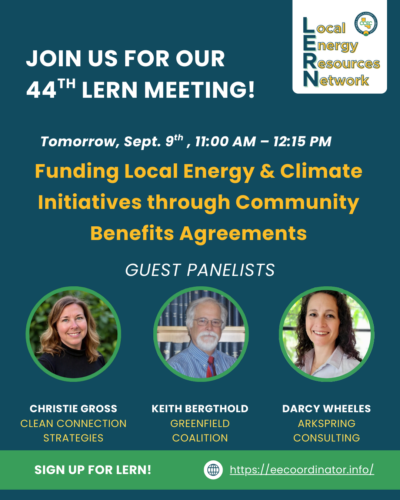
The Local Energy Resources Network held its 55th meeting, focusing on energy and climate opportunities for local governments. Angie Hacker, the Statewide Best Practices Coordinator for the California Climate and Energy Collaborative, led the meeting and provided updates on funding opportunities. The meeting featured a spotlight presentation from Adam Jue of Prospect SV, a short panel with Emily Alvarez and Amaury Bertrand sharing key takeaways from the ACEEE Summer Study, and a short presentation by Emily Searl from UC Davis introducing the Empower Procurement Product Evaluation Hub.
Learning Event
LERN Meeting 55:
Organization: CCEC
Organization Type: Other Private Sector Business
Region: Statewide

Date: August 11, 2026
Published in 2026
Topic Areas: Climate Planning, Codes and Standards, Energy Efficiency, Financing/Funding, Renewable Energy & Storage
Sectors Targeted: Local Governments, Nonprofit
Additional notes of interest: LERN Resources