View the details on what communities have shared with SLECC from across the state.
Key challenge discussed in - San Francisco Bay Area, Central Coast, Los Angeles, Inland Deserts, San Diego, Statewide
Fragmented, complex, and unstable incentive programs, with inconsistent messaging and rigid rules, make it difficult for homeowners, renters, and contractors to plan, stack benefits, or move projects forward, leading to missed opportunities and abandoned retrofits.
Clean Energy and Building Decarbonization
|
Retrofit Feasibility
Key challenge discussed in - San Francisco Bay Area, Los Angeles, Inland Deserts, San Diego, Statewide
Rising Electricity Rates Undermine the Household Electrification Value Proposition. High and rising electricity costs discourage households from switching from gas to electric systems, slowing a key pathway for emissions reductions. Despite available incentives, electricity rates remain high relative to gas, leading many households to delay electrification and limiting the value of energy efficiency measures that could otherwise reduce demand and bills.
Clean Energy and Building Decarbonization
|
Energy Affordability & Rates
Key challenge discussed in - Central Coast, Los Angeles, Inland Deserts, San Diego, Statewide
Older housing stock creates major barriers to electrification and resilience upgrades. Many homes require costly pre-work such as electrical panel upgrades, insulation improvements, and appliance replacement before zero-emission systems can be installed, making retrofits difficult to scale and disproportionately burdening low- and moderate-income households without affordability-first program design.
Illustrative example: In San Diego an estimated 800,000 buildings built before 1978 lack the electrical capacity or structural readiness for electrification, driving up retrofit costs and extending permitting timelines for clean-energy upgrades.
Clean Energy and Building Decarbonization
|
Retrofit Feasibility
Key challenge discussed in - San Francisco Bay Area, Los Angeles, Statewide
California lacks a coordinated, integrated strategy to address system cost drivers and align energy efficiency, electrification, and DER programs. Persistent program fragmentation (“siloization”)—with efficiency, water, resilience, and electrification measures pursued separately—prevents whole-building decarbonization, increases costs, and forces local governments and contractors to chase inconsistent, one-off funding opportunities.
Clean Energy and Building Decarbonization
|
Energy Affordability & Rates
Key challenge discussed in - San Francisco Bay Area, Central Coast, Los Angeles, Statewide
High Upfront Costs Limit Access to Housing Upgrades. High upfront costs prevent low-income, underinsured households—particularly in older buildings—from accessing resilience, cooling, electrification, and electrical upgrades. Incentives often cover only a small share of costs, limiting participation unless programs offer direct-install options or substantially higher cost coverage.
Housing & Climate Nexus
|
Climate Resilience Housing
Local Solution Opportunities
SLECC stakeholders have brainstormed the following solution opportunities that can be taken by local leaders. Existing examples of progress or pathways to make further progress are highlighted if known.
Clean Energy and Building Decarbonization
|
Retrofit Feasibility
Deliver outreach about retrofit and electrification programs through trusted CBOs, CCAs, RENs, and local intermediaries who provide unified, culturally grounded messaging that rebuilds trust and reduces confusion. Effective navigator models include language access and equity supports (translation, interpretation, childcare, and food) to reach low-income, rural, Tribal, and linguistically diverse communities where they are.
Existing Examples of Progress:
1. GRID Alternatives and Pacoima Beautiful conduct solar clinics, door-to-door canvassing, and community events to rebuild trust and drive awareness in historically underserved neighborhoods. 2. CPUC-established Regional Energy Networks (RENs) serve as non-utility administrators delivering localized energy efficiency programs and stacking incentives to minimize costs. 3. The Southern California Tribal Energy and Climate Collaborative (SoCalTEC), an SGC RCC recipient, helps 25 Tribes access multiple funding sources and successfully rallied tribal and local organizations to extend CPUC Self-Generation Incentive Program deadlines for up to 200 storage projects.
Further Progress Pathways
Region(s): San Francisco Bay Area, Los Angeles, Inland Deserts, San Diego, Statewide
Clean Energy and Building Decarbonization
|
Retrofit Feasibility
Offer concierge-style technical assistance to help households and small businesses move from interest to completion (explaining retrofit options, navigating requirements, stacking incentives, completing applications, and coordinating next steps) reducing drop-off from program complexity and improving equitable access to electrification and resilience upgrades.
Existing Examples of Progress:
1. South Coast AQMD is requiring zero-emission space and water heating technologies and launching a Go Zero program targeting overburdened communities with rebates, stacked incentives, and funding navigation assistance. 2. The Basset Avocado Advanced Energy Community Pilot provides comprehensive homeowner navigation for retrofit incentives and code compliance — participants recommended replication across the region. 3. Silicon Valley Clean Energy operates a one-on-one concierge model for incentive navigation and retrofit support. 4. The City of Alhambra enhances language access and in-person enrollment at libraries for rebates and energy programs. 5. GREEN served 80 small businesses in the Central Coast through a partnership with Intuit before losing state funding in 2023, demonstrating the model's effectiveness and its dependence on sustained public investment.
Further Progress Pathways
1. CCEC's assistance marketplace. 2. New local or regional based grant programs: SoCalREN, BAAD, SCAG, CPA.
Region(s): San Francisco Bay Area, Central Coast, Los Angeles, Inland Deserts, San Diego, Statewide
Clean Energy and Building Decarbonization
|
Retrofit Feasibility
Coordinate Regionally to Integrate Incentives and Deliver Turnkey, Multi-Benefit Retrofits. Local governments can participate in regional coordination frameworks—such as collaboration tables or hubs—to align retrofit funding, permitting, and outreach across jurisdictions. Through this coordination, agencies and partners can integrate funding sources behind the scenes using referral systems, bundled incentives, and turnkey retrofit offerings, enabling residents to access a single, streamlined pathway for cooling, electrification, panel upgrades, and resilience improvements.
Existing Examples of Progress:
1. 2. The CPUC established Regional Energy Networks (RENs) in 2012 as non-utility administrators to fill gaps in localized, cross sector energy efficiency delivery, funded through ratepayer funds for Energy Efficiency (EE). RENs often work to stack incentives with other sources for IDSM and DER measures to keep costs as low as possible. 2. A multifamily building was able to install new heat-pump systems only because the owner stacked incentives from two local programs (BayREN and TECH), receiving about $80,000 in grants; even so, he had to front the full amount before reimbursement, highlighting the need for easier, low- or no-upfront models.
Further Progress Pathways
Region(s): San Francisco Bay Area, Inland Deserts, San Diego, Statewide
State Solution Opportunities
SLECC stakeholders have brainstormed the following solution opportunities that can be taken by state leaders. Existing examples of progress or pathways to make further progress are highlighted if known.
Clean Energy and Building Decarbonization
|
Energy Affordability & Rates
Reform rate structures and program designs to protect low-income, renter, tribal, and disadvantaged communities from rising transmission and electrification costs, while scaling direct support (subsidies, rebates, and upfront retrofit and electrification financing) to make efficient options accessible year-round and during emergencies.
Existing Examples of Progress:
Further Progress Pathways
CEC/CPUC Disadvantaged Communities Advisory Group (DACAG)
Region(s): Central Coast, Los Angeles, Inland Deserts, San Diego, Statewide
Clean Energy and Building Decarbonization
|
Energy Affordability & Rates
Establish a coordinated statewide clean-energy transition authority or strategy that aligns affordability, reliability, and decarbonization goals across CPUC, CEC, IOUs, and related agencies. This unified framework would address fragmented decision-making, manage system cost drivers, protect households from rising energy bills, and prevent redundant or conflicting infrastructure investments while advancing an equitable energy transition.
Existing Examples of Progress:
Further Progress Pathways
Region(s): San Francisco Bay Area, Inland Deserts, San Diego, Statewide
Clean Energy and Building Decarbonization
|
Retrofit Feasibility
Reform state retrofit funding and incentive systems to be integrated, flexible, and predictable—enabling incentive stacking behind the scenes, covering pre-condition repairs, expanding eligibility, allowing adaptive use of funds over project lifecycles, and providing stable, rolling funding so residents and contractors can proceed with confidence.
Existing Examples of Progress:
1. The CPUC established Regional Energy Networks (RENs) in 2012 as non-utility administrators to fill gaps in localized, cross sector energy efficiency delivery, funded through ratepayer funds for Energy Efficiency (EE). RENs often work to stack incentives with other sources for IDSM and DER measures to keep costs as low as possible. 2. CEC has funded local programs and projects through recent one-time sources through the IRA DOE HEERHA, HOMES, EECBG programs and the related Local Government Challenge and regionally administered Equitable Building Decarbonization (EBD) program.
Further Progress Pathways
1. GGRG Reauthoritzation & CCI Investment Plan - The Assembly briefly considered allocating a 10% share of GGRF to Clean Energy in 2025. 2. CPUC EE Proceeding. 3. New local or regional based grant programs: SoCalREN, BAAD, SCAG, CPA
Region(s): Los Angeles, Inland Deserts, San Diego, Statewide
Solution Spotlight
CEC funded Bassett & Avocado Heights Advanced Energy Community (BAAEC) stacks capital across programs
The Bassett & Avocado Heights Advanced Energy Community (BAAEC) is a groundbreaking five-year demonstration project that addresses environmental justice through community-scale clean energy deployment in two disadvantaged unincorporated areas of Los Angeles County. Serving approximately 28,000 residents across 4.7 square miles, the project is funded by a California Energy Commission EPIC Challenge grant and has already provided free solar installations to 34 homeowners while offering 20% average monthly electricity bill savings through its Community Solar program. AdvancedenergycommunityAdvancedenergycommunity These predominantly Latino communities have been disproportionately burdened by pollution from three nearby freeways, the Quemetco battery recycling center, and a nearby landfill, resulting in chronic health issues including asthma and lung cancer, with neighborhoods predicted to experience over 40 additional extreme heat days per year by 2050. Boom CaliforniaHomes
BAAEC employs an integrated approach featuring four main components: Advanced Homes providing up to $50,000 in free energy equipment including solar panels and battery storage managed as a virtual power plant; Community Solar offering 100% local renewable electricity at 20% discounts; a Microgrid Resiliency Hub with 4-5 hours of backup power capacity; and Clean Transportation including EV charging infrastructure and zero-emissions mobility services expected to reduce annual emissions by 30.5 MTCO2e. Basset/Avocado Heights Advanced Energy Community (BAAEC) The project also demonstrates innovative technologies like blockchain-enabled carbon credit trading and real-time vehicle emissions monitoring while prioritizing community engagement through youth advocacy programs and leadership academies that train residents to become energy champions.
Led by The Energy Coalition in partnership with organizations including ActiveSGV, UCLA’s California Center for Sustainable Communities, and GRID Alternatives, BAAEC serves as a replicable model for just energy transitions that simultaneously address climate goals and environmental justice. AdvancedenergycommunityAdvancedenergycommunity The project’s success stems from breaking down structural barriers common in disadvantaged communities—including high levels of renters, lower-income and limited-English-speaking residents—through comprehensive community engagement, cultural competency, and elimination of upfront costs. By centering authentic community partnership while deploying cutting-edge clean energy technology, BAAEC demonstrates how ambitious climate goals and community empowerment can be achieved together, providing valuable lessons for scaling similar initiatives across California and beyond.
Local and regional agencies have been supporting retrofits for decades. The CPUC established Regional Energy Networks (RENs) in 2012 as non-utility administrators to fill gaps in localized, cross sector energy efficiency delivery, funded through ratepayer funds for Energy Efficiency (EE). RENs often work to stack incentives with other sources for IDSM and DER measures to keep costs as low as possible. The South Coast AQMD Go Zero Program dedicated $21 million in mitigation funds to cover zero emission technology conversions, targeting overburdened communities by helping them find and stack incentives.
The Southern California Tribal Energy and Climate Collaborative is one of six SGC RCC recipients formed to help 25 Tribes access multiple sources of funding. Thanks to a CPUC grant designed to create equitable engagement in regulatory proceedings, SoCalTEC was successful in rallying tribal and local organizations and legislators around extending the CPUC Self Generation Incentive Program rebate deadlines for up to 200 energy storage projects.
CEC has funded local programs and projects through recent one-time sources through the IRA DOE HEERHA, HOMES, EECBG programs and the related Local Government Challenge and regionally administered Equitable Building Decarbonization (EBD) program. San Diego County recently voted to invest $500K to expand the EBD program to all unincorporated areas.
CPUC R.87-11-012 established an annual Cost of Capital (CoC) proceeding for IOUs. In December 2025, the CPUC voted to drop the return on equity for Pacific Gas & Electric, Southern California Edison, Southern California Gas Company and San Diego Gas & Electric by 0.3 percentage points each. to just under 10 percent, which are more consistent with national trends. Legislation introduced in both Rhode Island (H 5018) and New York (S5687) proposes to establish a fixed ROE of 4 percent annually for electric and gas utilities.
Local programs like Watts Rising and Habitat for Humanity programs are addressing structural building needs and going beyond basic energy saving upgrades.
RENs have a successful model for bringing energy efficiency programs to hard-to-reach communities and demonstrating the economic value of localized demand reduction.
City of Colton’s municipal utility maintain stable rates and energy efficiency and weatherization programs that may not maximize state-reported savings, but better serve their low-income, high-need customer base.
A package of 2025 CA legislation aptly refocused on system cost drivers rather than cuts to energy programs. AB 825 was amended to cut energy costs and improve grid reliability by joining a Western regional power market. SB 254 sets up a public financing system to build new transmission lines, and bars utilities from earning profit on the next $6 billion spent on wildfire-safety upgrades. In addition, AB 1167 (the California Ratepayer Protection Act) prohibits investor-owned utilities from charging customers for political lobbying, promotional advertising, and shareholder-related expenses, requires transparency about who pays for utility ads, and mandates financial penalties for violations. Oregon’s HB 3546 creates a classification of service for large energy use facilities (e.g. data centers) with rates proportionate to the costs of service.
The BayREN Business Program (Program) is an energy efficiency program designed to help small businesses in the nine Bay Area counties reduce their energy consumption, improve energy affordability, and lower operating costs through energy efficiency retrofits.
Since June 2023, the Program has completed 279 projects for hard-to-reach (HTR) businesses, which often have less than 25 employees, speak a language other than English, and lease or rent their facilities. Participating businesses saved an average of $3,300 annually on their utility bills because they reduced their energy usage by an average of 7,400 kWh annually. The average incentive provided was $18,000 per project, allowing projects to be no-cost or low-cost for these small businesses.
The Program uses a pay-for-performance approach where incentives are paid based on actual energy savings measured at the meter. This approach protects ratepayers from paying for non-existent energy savings. It also allows the Program to offer higher incentives to contractors to help offset the extra challenge of acquiring and completing projects for these typically overlooked businesses.
In 2026, the Program is expanding from only serving HTR businesses to also serving small businesses located in disadvantaged or low-income communities. These businesses have typically been overlooked by energy efficiency providers due to their lower-than-average energy savings potential and higher-than-average acquisition costs. Learn more at bayrenbusiness.org.
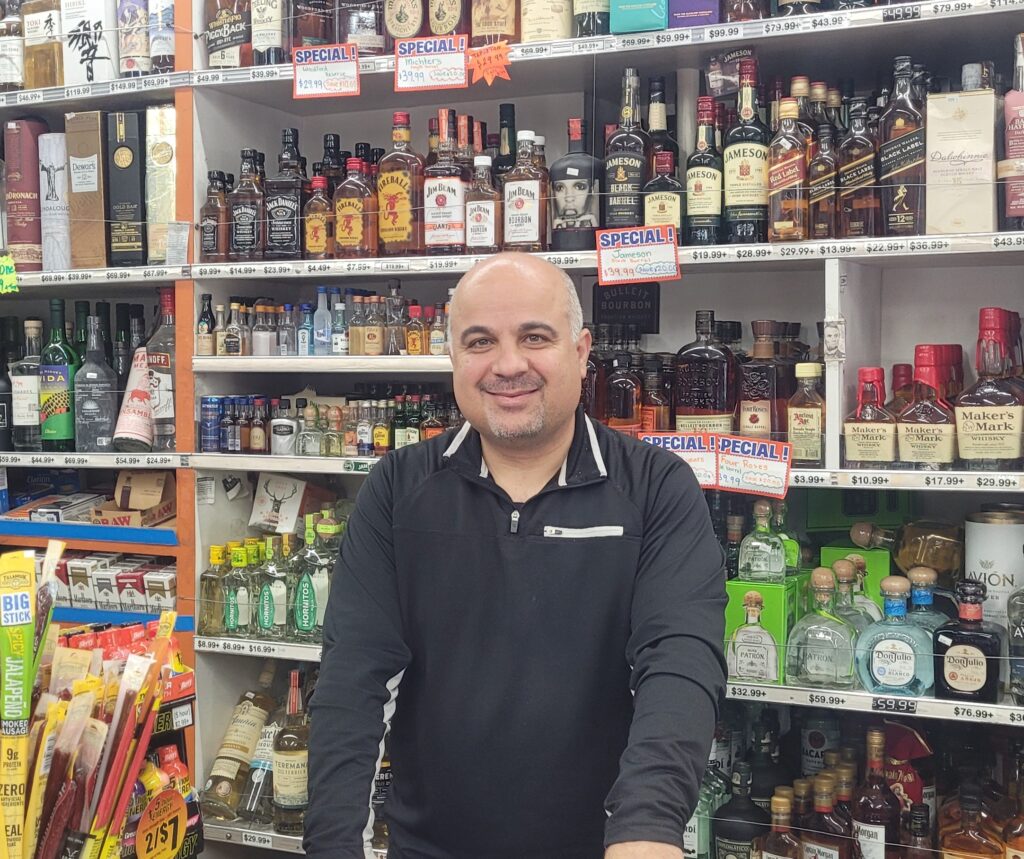
Description: Sami Hatter, Manager at Oak Hill Market in San Francisco, participated in BayREN Business to upgrade the store’s lighting and refrigeration systems at no cost using incentives, saving about $4,100 annually in energy costs.